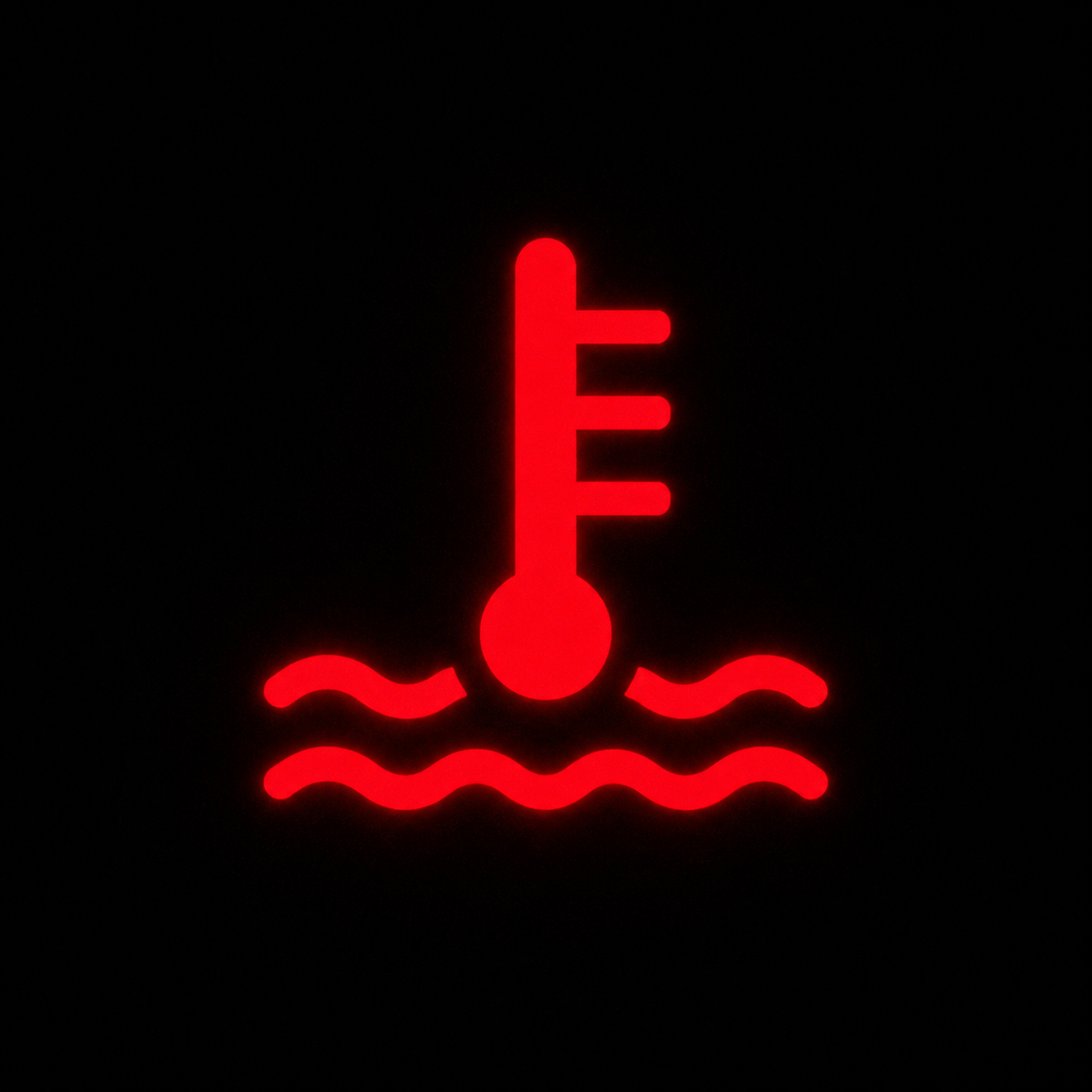
What it means
This warning usually shows a thermometer in liquid or a red temperature symbol. It means the engine coolant temperature is higher than normal, which can lead to serious engine damage if ignored. Treat a red temperature or overheat light as "pull over soon," not "finish the trip and see."
Low coolant light vs temperature / overheat light
Some vehicles have a separate low-coolant icon (often a reservoir or float symbol) that means the overflow tank is low — not necessarily that the engine is already overheating. A temperature / overheat light (thermometer) means the system thinks coolant is too hot. Both matter: low coolant can become overheating within minutes. Check your owner's manual artwork if you are unsure which icon you have, then check reservoir level only when the engine is cool.
What to do first
- Pull over safely and turn off the engine.
- Wait at least 15–30 minutes before opening the coolant cap — hot coolant can spray and burn.
- Check for steam, sweet smell, or visible leaks under the car.
- Check the coolant reservoir level only when the system is cool, if you know how to do so safely.
- If the gauge climbs into the red or steam appears, do not limp home — arrange a tow.
When the light comes on and off
An intermittent coolant or temperature light can still mean a real problem. Common patterns include low coolant that sloshes away from a level sensor, a sticking thermostat, a cooling fan that only runs sometimes, a weak water pump, or a flaky coolant temperature sensor/wiring. If the light returns after you top up coolant, or the gauge climbs when the light flashes, treat it as an overheating risk and get the system pressure-tested.
Common causes
- Low coolant level or leak
- Faulty thermostat
- Cooling fan not running
- Blocked radiator or airflow issue
- Water pump failure
- Faulty coolant temperature sensor or connector
When it is most serious
Stop immediately if you see steam from under the hood/bonnet, smell coolant, hear boiling, or lose power. Driving an overheating engine can warp the cylinder head or cause costly head-gasket damage.
Coolant Temperature Warning FAQ
What does the engine coolant temperature light mean?
It is an overheating / cooling-system warning. A steady red temperature light while driving means pull over safely, shut the engine off, and let it cool before opening anything in the cooling system. Continuing to drive can damage the head gasket or warp the head within minutes.
Can I keep driving with the coolant light on?
No — not as a plan. If the temperature or overheat light is on, stop as soon as it is safe. A very short move out of a live lane may be necessary, but limping many miles risks expensive engine damage. If you see steam or the gauge is in the red, shut down and tow.
What if the coolant light goes on and off?
Intermittent lights often mean low coolant, a sticking thermostat, an intermittent fan, or a sensor issue — not a false alarm you can ignore. Check reservoir level when cool, look for leaks, and confirm the radiator fan runs when the engine is hot or A/C is on. If the light returns, get a cooling-system diagnosis.
Can I add water if coolant is low?
Only when the engine is cool and you use the correct coolant mix recommended in your manual. Plain water is a temporary emergency measure on some vehicles, not a long-term fix.
Why did the light come on in traffic?
Low airflow at idle, a weak fan, low coolant, or a stuck thermostat can trigger overheating in stop-and-go driving. Watch the temperature gauge; if it climbs, pull over and shut the engine off.
Related symbols
Dashboard symbols vary by make and model. Always confirm the exact meaning in your owner's manual.